14.1 Overview of Homing Mode Functionality.
The Homing Mode is used during machine startup or reset to accurately position the axis at the home reference point, ensuring correct baseline for subsequent operations. This mode combines sensor signals and encoder Z-phase signals to achieve safe and precise positioning.
|
14.2 Description of Homing Mode Parameters and Signal Switches. |
|
|
1. |
Original Point Signal Finding (DEC) The servo moves slowly in the specified direction (positive or negative), detecting the |
rising or falling edge of the original point sensor signal. The default is a normally closed switch.
2. Encoder Z-Phase Signal Finding Depending on the mode setting, it moves in the positive or negative direction. Upon detecting the Z-phase signal, it immediately stops and sets the origin.
3. Limit Protection Reverse and Overtravel If a limit sensor (P-OT or N-OT) trigger is detected during movement, it stops or automatically reverses according to the mode setting, continuing to search for the Z-phase signal. The default is a normally closed switch.
Related Parameters
|
Parameter |
Name |
|
Pn633 |
Home method |
|
Pn634 |
Speed during search for switch |
|
Pn635 |
Speed during search for zero |
14.3 Description of Home method
1. Homing with the negative limit (N-OT) switch and index pulse(DS402 Home method 1)
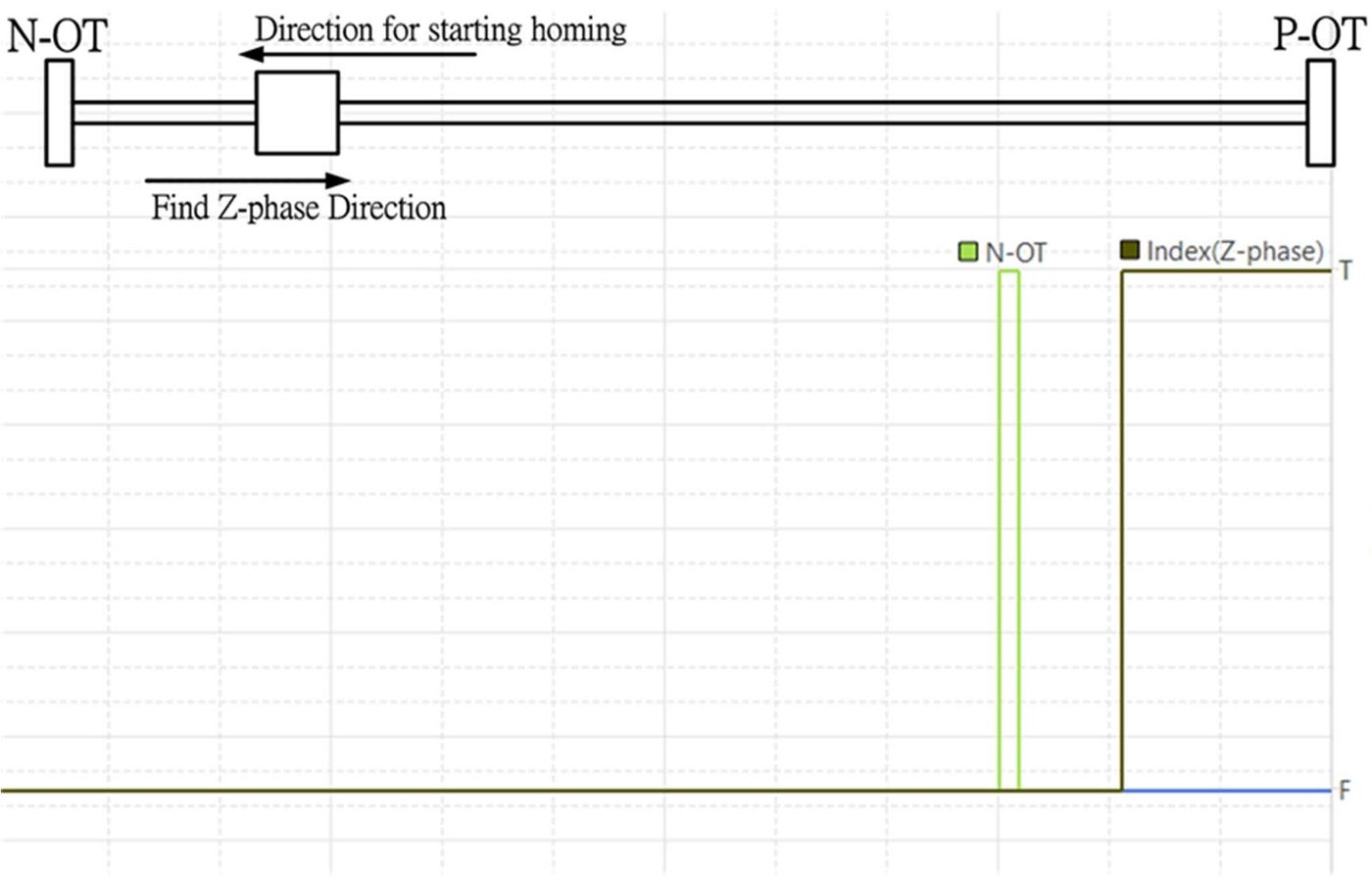
Homing Mode Description
1. Upon receiving thehoming return start signal, the servo moves toward the negative limit at the designated homing return speed (parameter Pn634) to locate the negative limit sensor (N-OT).
2. When the servo detects the rising edge signal of the negative limit sensor (N-OT), it reverses direction and decelerates to the speed specified for detecting the Z-phase (Index) signal (parameter Pn635).
3. The servo then moves toward the positive limit until the rising edge of the encoder’s Z-phase (Index) signal is detected, thereby completing the homing return process.
2. Homing with the positive limit (P-OT) switch and index pulse(DS402 Home method 2)
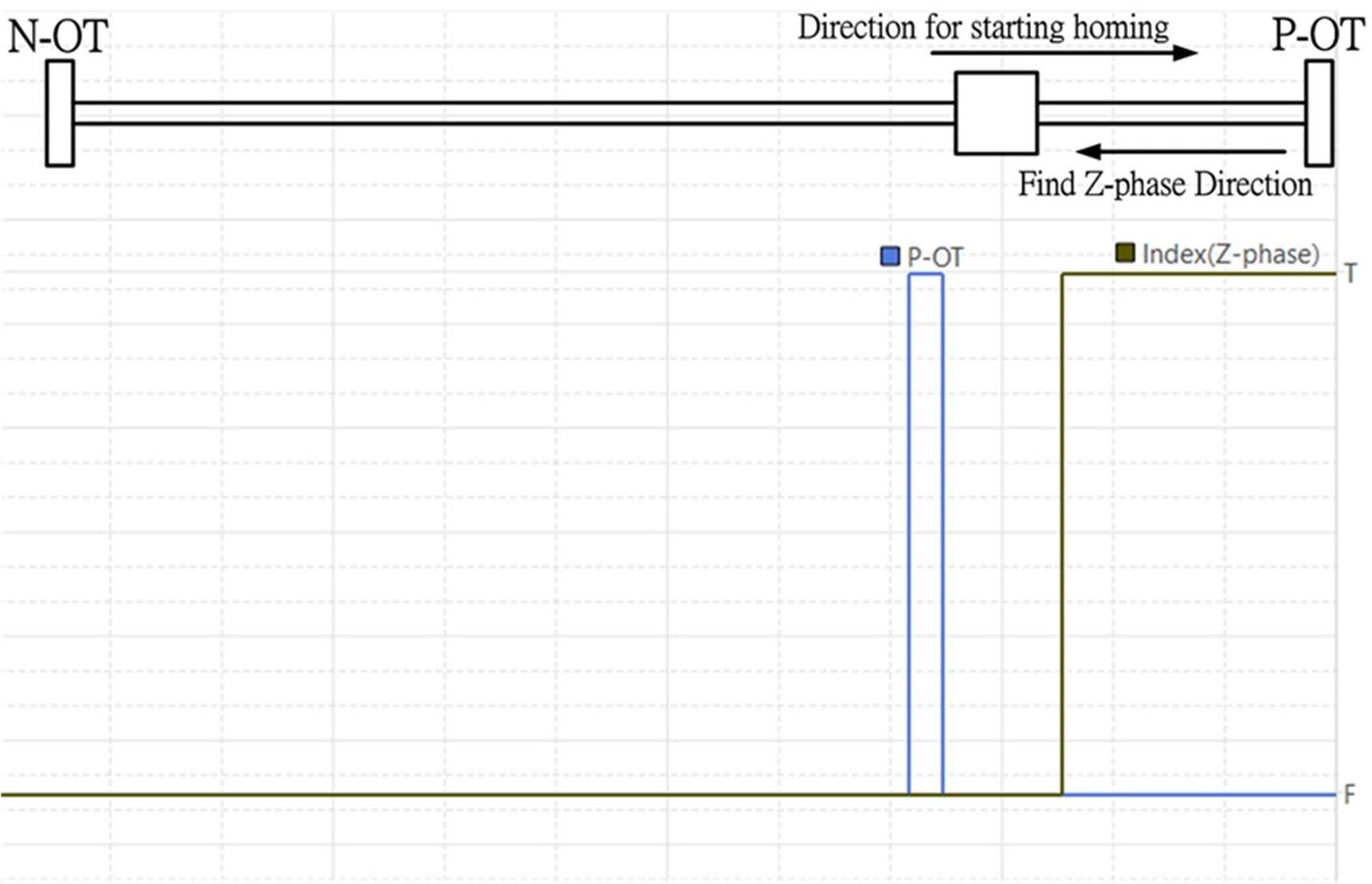
Homing Mode Description
1. Upon receiving the homing return start signal, the servo moves toward the negative limit at the designated homing return speed (parameter Pn634) to locate the positive limit sensor (P-OT).
2. When the servo detects the rising edge signal of the positive limit sensor (P-OT), it reverses direction and decelerates to the speed specified for detecting the Z-phase (Index) signal (parameter Pn635).
3. The servo then moves toward the positive limit until the rising edge of the encoder’s Z-phase (Index) signal is detected, thereby completing the homing return process.
3. Homing on positive home switch and index pulse(DS402 Home method 3)
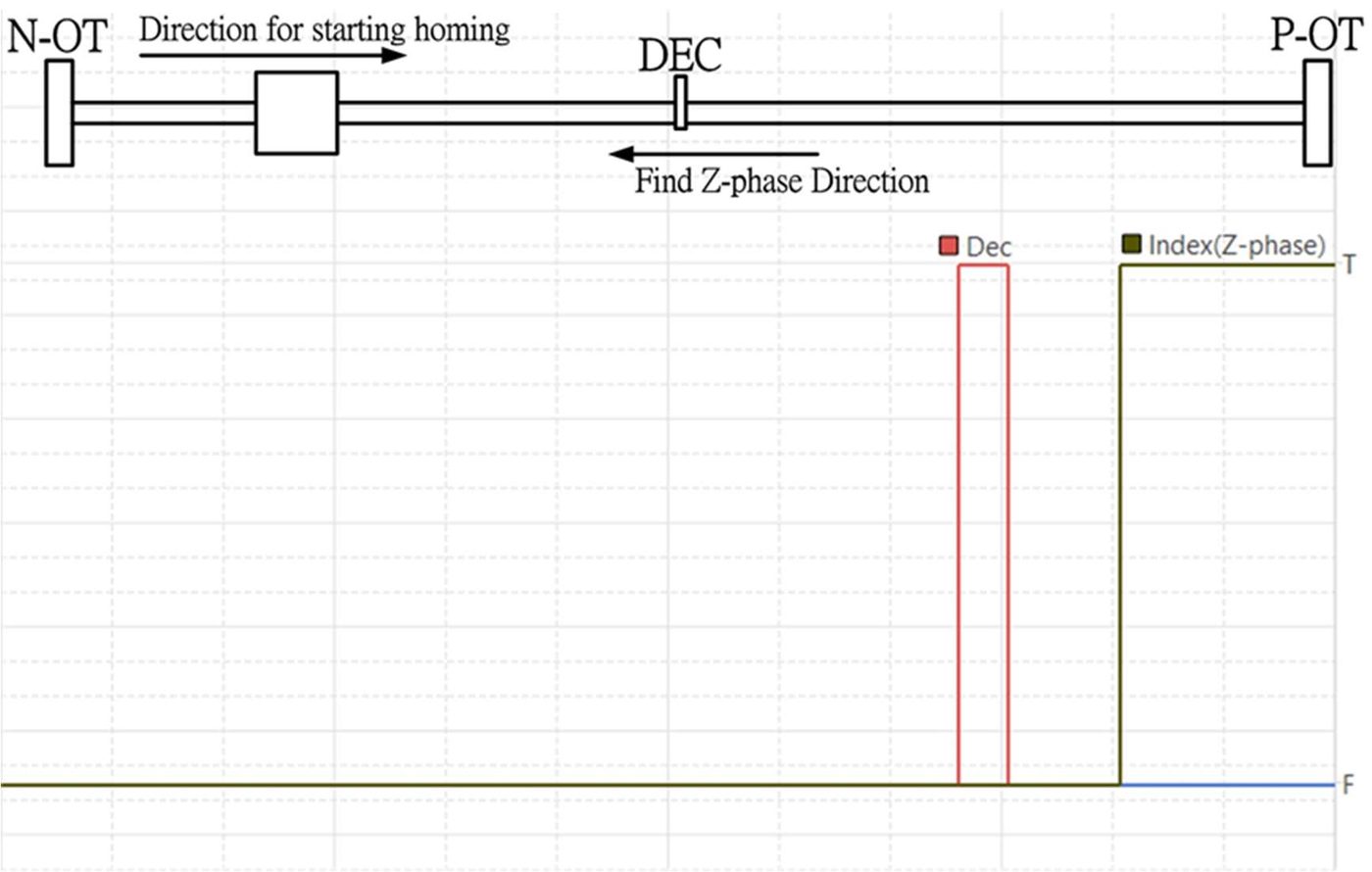
Homing Mode Description
1. Upon receiving the homing return start signal, the servo moves toward the positive limit (P-OT) at the designated homing return speed (parameter Pn634) to locate the homing deceleration sensor (DEC).
2. When the servo detects the rising edge signal of the homing deceleration sensor (DEC), it reverses direction and decelerates to the speed specified for detecting the Z-phase (Index) signal (parameter Pn635).
3. The servo then moves toward the negative limit (N-OT) until the rising edge of the encoder’s Z-phase (Index) signal is detected, thereby completing the homing return process.
4. Homing on positive home switch and index pulse(DS402 Home method 4)
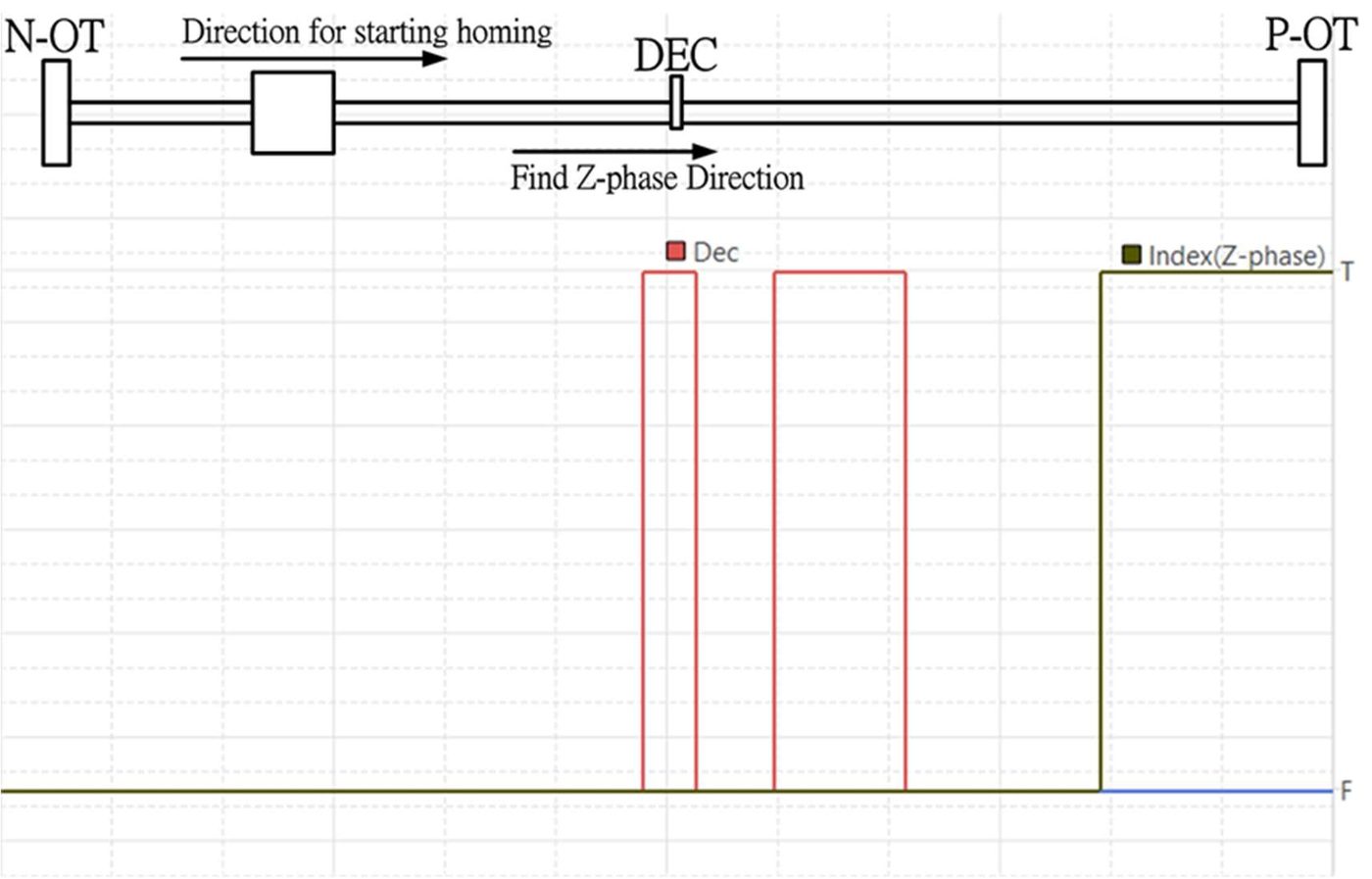
Homing Mode Description
1. Upon receiving the homing return start signal, the servo moves toward the positive limit (P-OT) at the designated homing return speed (parameter Pn634) to locate the homing deceleration sensor (DEC).
2. When the servo detects the rising edge signal of the homing deceleration sensor (DEC), it decelerates to the speed specified for detecting the Z-phase (Index)
3. The servo continues moving toward the positive limit (P-OT) at the Z-phase detection speed (Pn635) until the rising edge of the encoder’s Z-phase (Index) signal is detected, thereby completing the homing return process.
5. Homing with the negative home switch and index pulse(DS402 Home method 5)
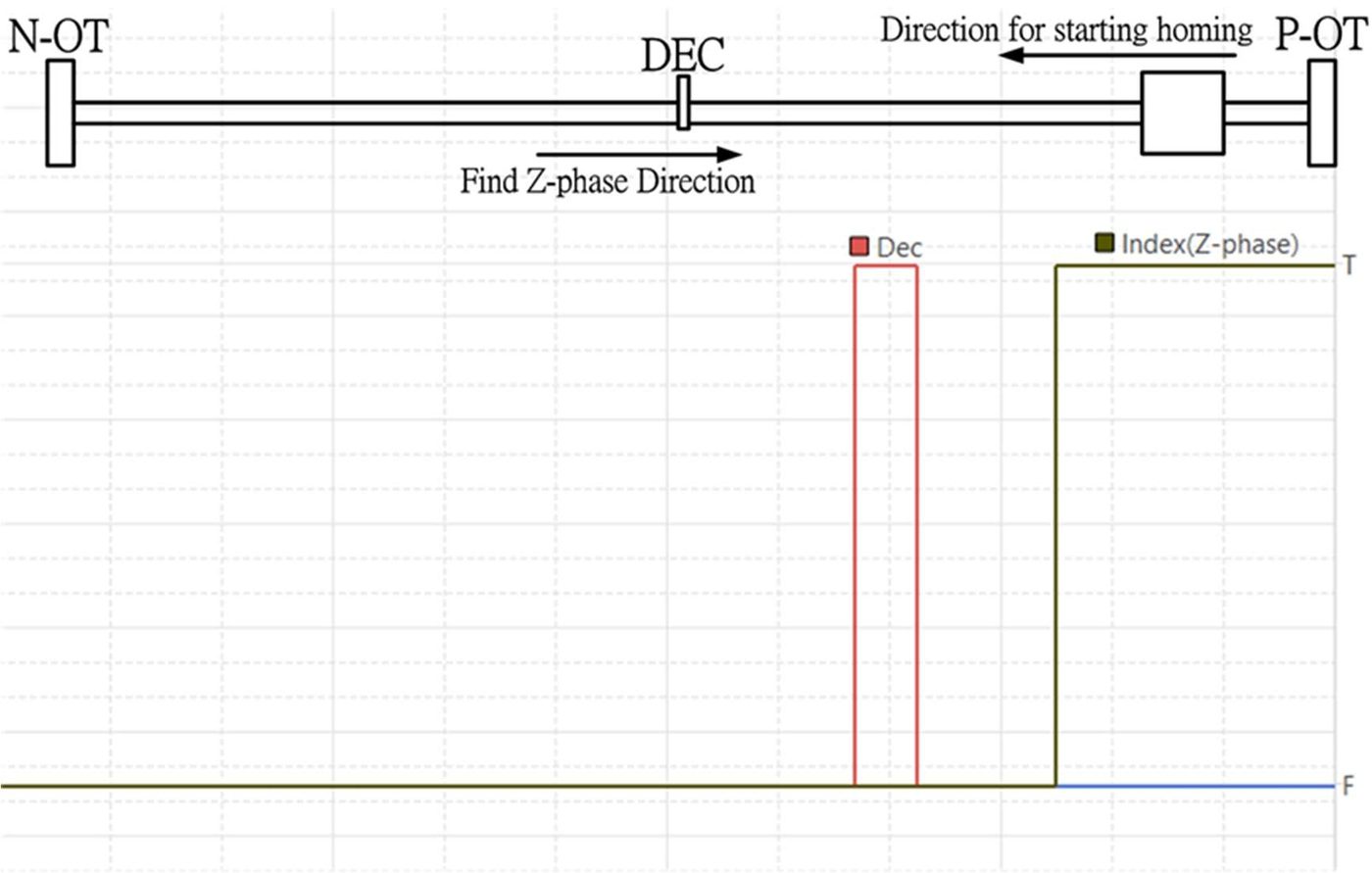
Homing Mode Description
1. Upon receiving the homing return start signal, the servo moves toward the negative limit (N-OT) at the designated homing return speed (parameter Pn634) to locate the homing deceleration sensor (DEC).
2. When the servo detects the falling edge signal of the homing deceleration sensor (DEC), it decelerates to the speed specified for detecting the Z-phase (Index) signal (parameter Pn635).
3. The servo continues moving toward the positive limit (P-OT) at the Z-phase detection speed (Pn635) until the rising edge of the encoder’s Z-phase (Index) signal is detected, thereby completing the homing return process.
6. Homing with the negative home switch and index pulse(DS402 Home method 6)
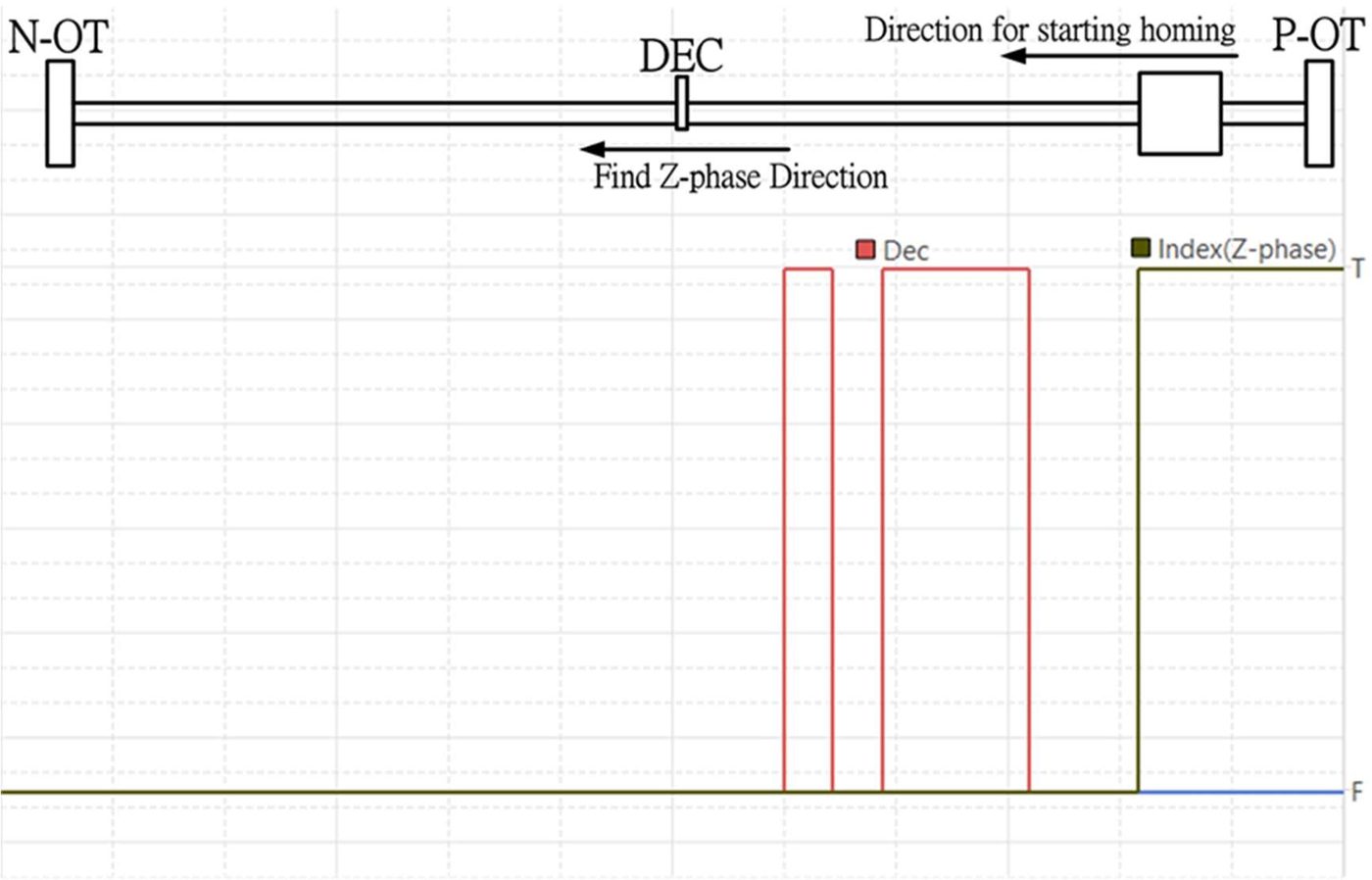
Homing Mode Description
1. Upon receiving the homing return start signal, the servo moves toward the negative limit (N-OT) at the designated homing return speed (parameter Pn634) to locate the homing deceleration sensor (DEC).
2. When the servo detects the falling edge signal of the homing deceleration sensor (DEC), it decelerates to the speed specified for detecting the Z-phase (Index) signal (parameter Pn635).
3. The servo continues moving toward the negative limit (N-OT) at the Z-phase detection speed (Pn635) until the rising edge of the encoder’s Z-phase (Index) signal is detected, thereby completing the homing return process.
7. Homing with home switch and index pulse(DS402 Home method 7)
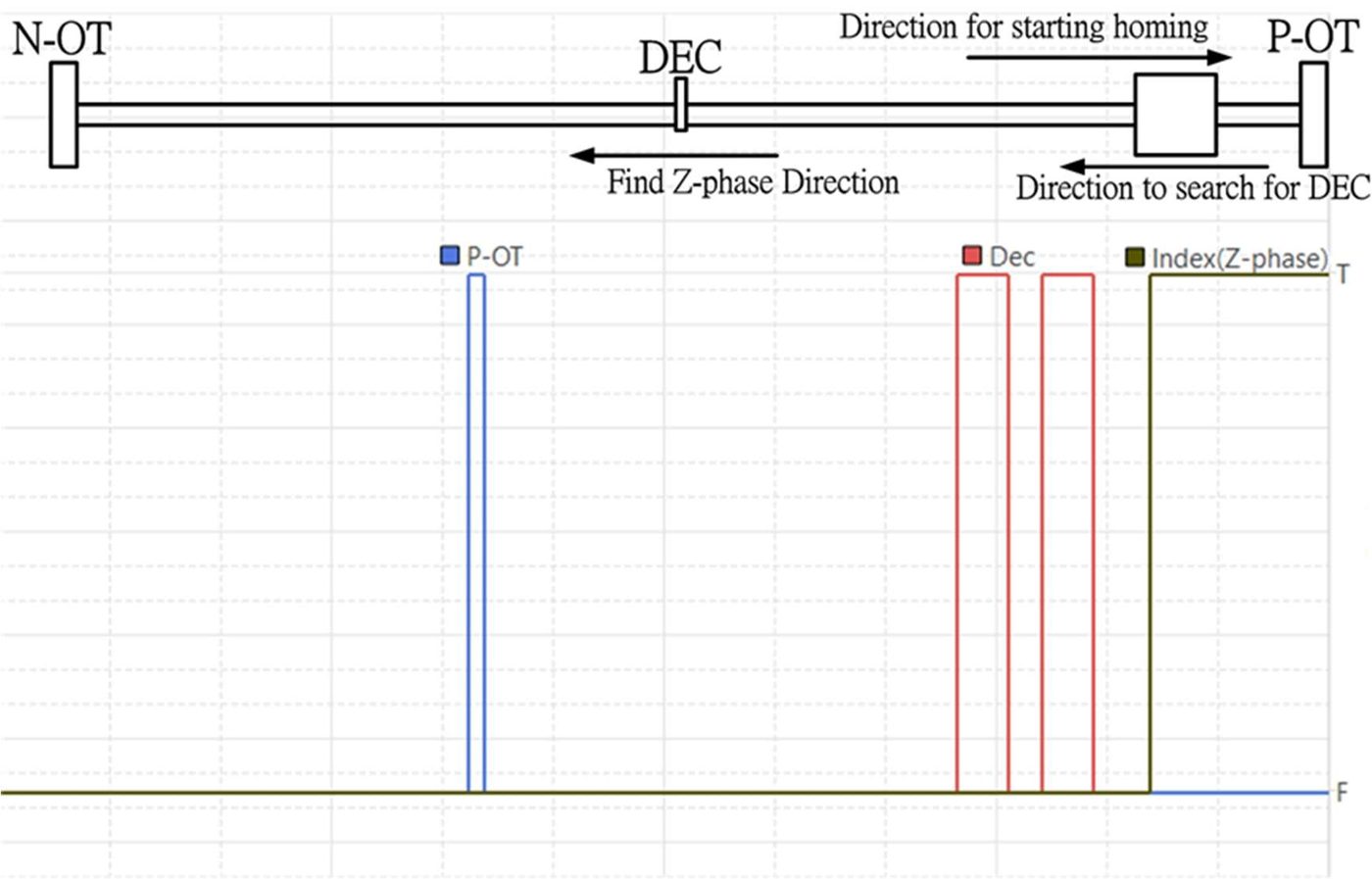
Homing Mode Description
1. Upon receiving the homing return start signal, the servo moves toward the positive limit (P-OT) at the designated homing return speed (parameter Pn634) to locate the homing deceleration sensor (DEC).
2. If the positive limit (P-OT) is reached during movement, the servo reverses direction and moves toward the negative limit (N-OT), continuing to search for the homing deceleration sensor (DEC).
3. When the servo detects the rising edge signal of the homing deceleration sensor (DEC), it decelerates to the speed specified for detecting the Z-phase (Index) signal (parameter Pn635).
4. The servo continues moving toward the negative limit (N-OT) at the Z-phase detection speed (Pn635) until the rising edge of the encoder’s Z-phase (Index) signal is detected, thereby completing the homing return process.
8. Homing with home switch and index pulse(DS402 Home method 8)
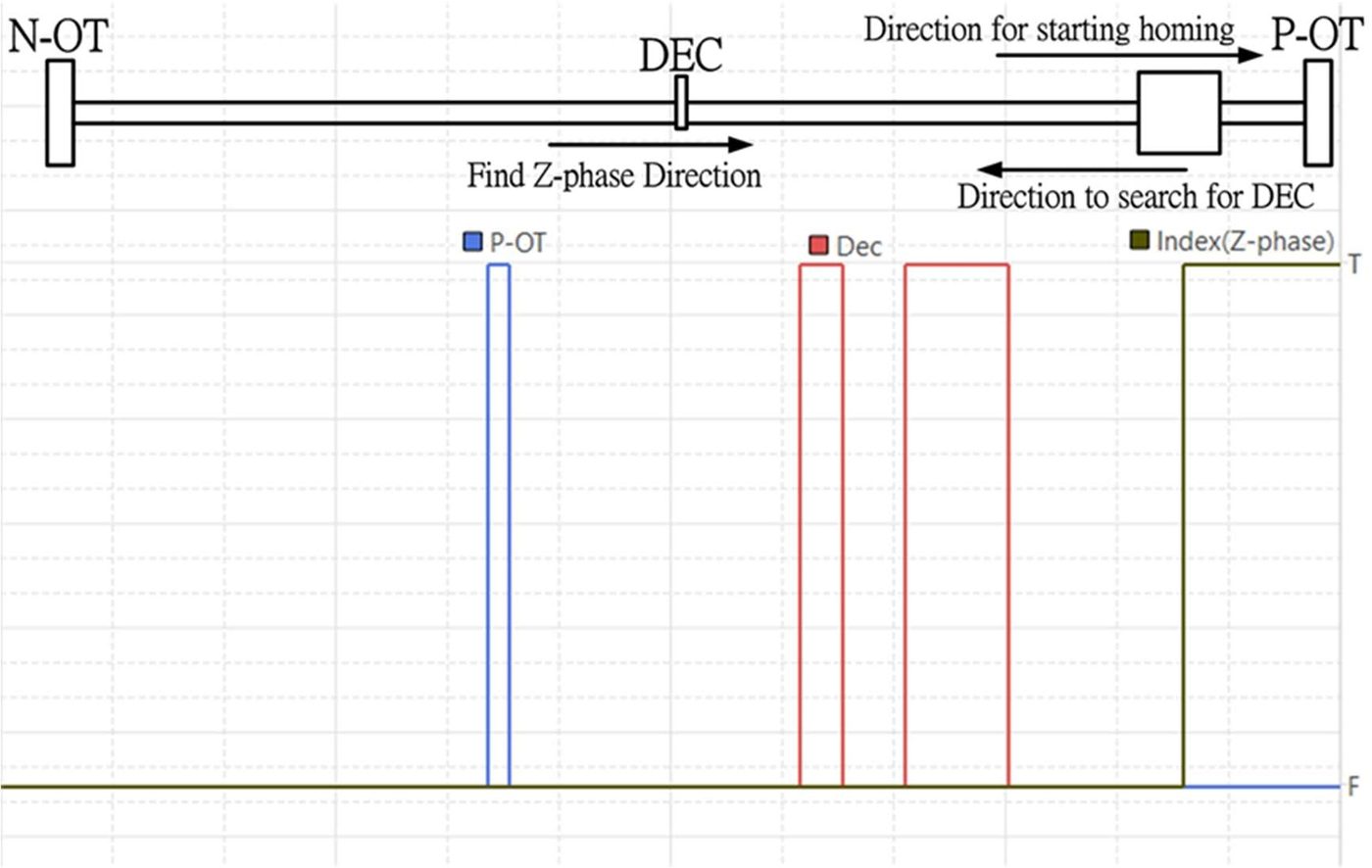
Homing Mode Description
1. Upon receiving the homing return start signal, the servo moves toward the positive limit (P-OT) at the designated homing return speed (parameter Pn634) to locate the homing deceleration sensor (DEC).
2. If the positive limit (P-OT) is reached during movement, the servo reverses direction and moves toward the negative limit (N-OT), continuing to search for the homing deceleration sensor (DEC).
3. When the servo detects the rising edge signal of the homing deceleration sensor (DEC), it decelerates to the speed specified for detecting the Z-phase (Index) signal (parameter Pn635).
4. The servo continues moving toward the positive limit (P-OT) at the Z-phase detection speed (Pn635) until the rising edge of the encoder’s Z-phase (Index) signal is detected, thereby completing the homing return process.
9. Homing with home switch and index pulse(DS402 Home method 9)
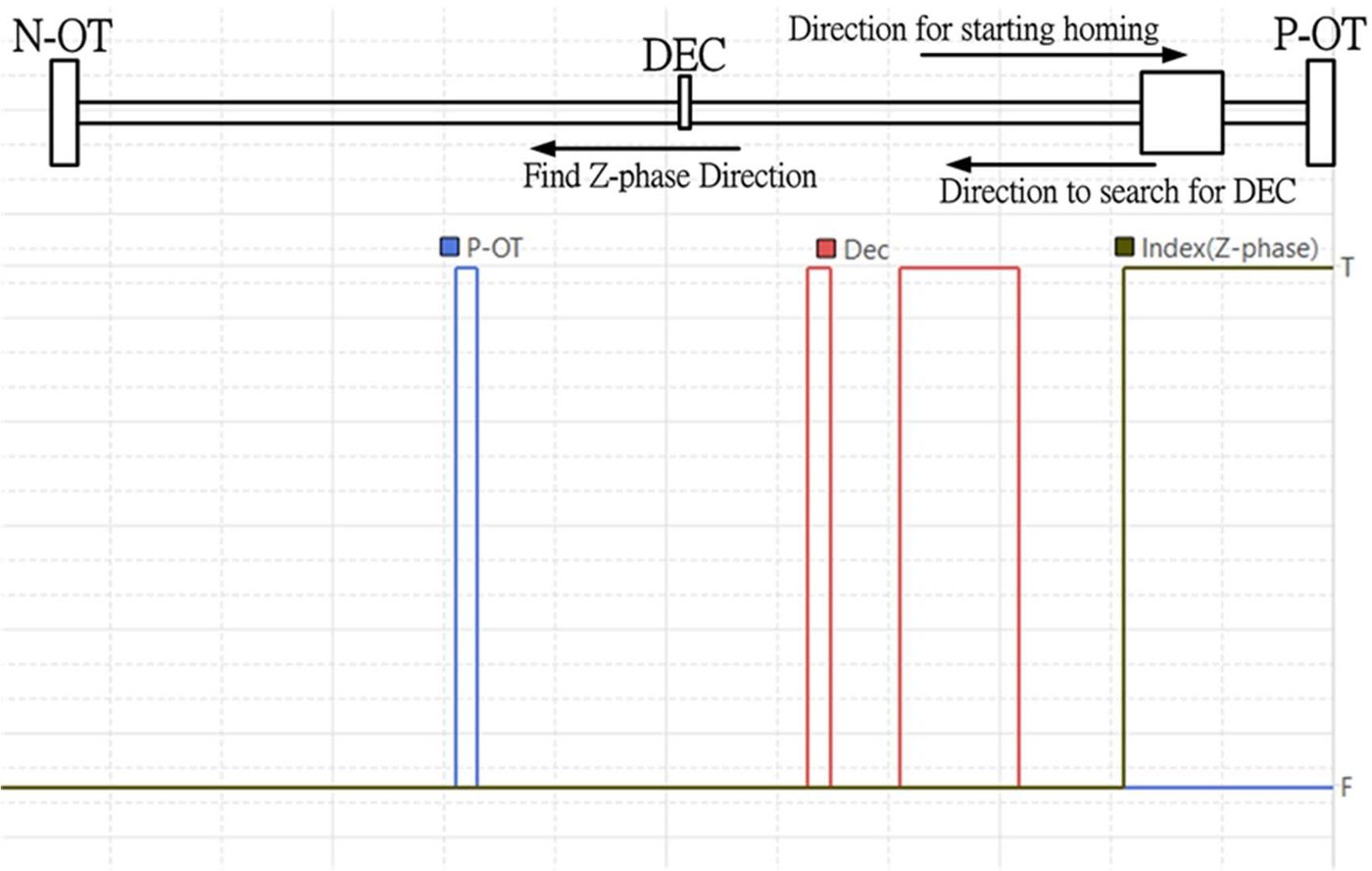
Homing Mode Description
1. Upon receiving the homing return start signal, the servo moves toward the positive limit (P-OT) at the designated homing return speed (parameter Pn634) to locate the homing deceleration sensor (DEC).
2. If the positive limit (P-OT) is reached during movement, the servo reverses direction and moves toward the negative limit (N-OT), continuing to search for the homing deceleration sensor (DEC).
3. When the servo detects the falling edge signal of the homing deceleration sensor (DEC), it decelerates to the speed specified for detecting the Z-phase (Index) signal (parameter Pn635).
4. The servo continues moving toward the negative limit (N-OT) at the Z-phase detection speed (Pn635) until the rising edge of the encoder’s Z-phase (Index) signal is detected, thereby completing the homing return process.
10. Homing with home switch and index pulse(DS402 Home method 10)
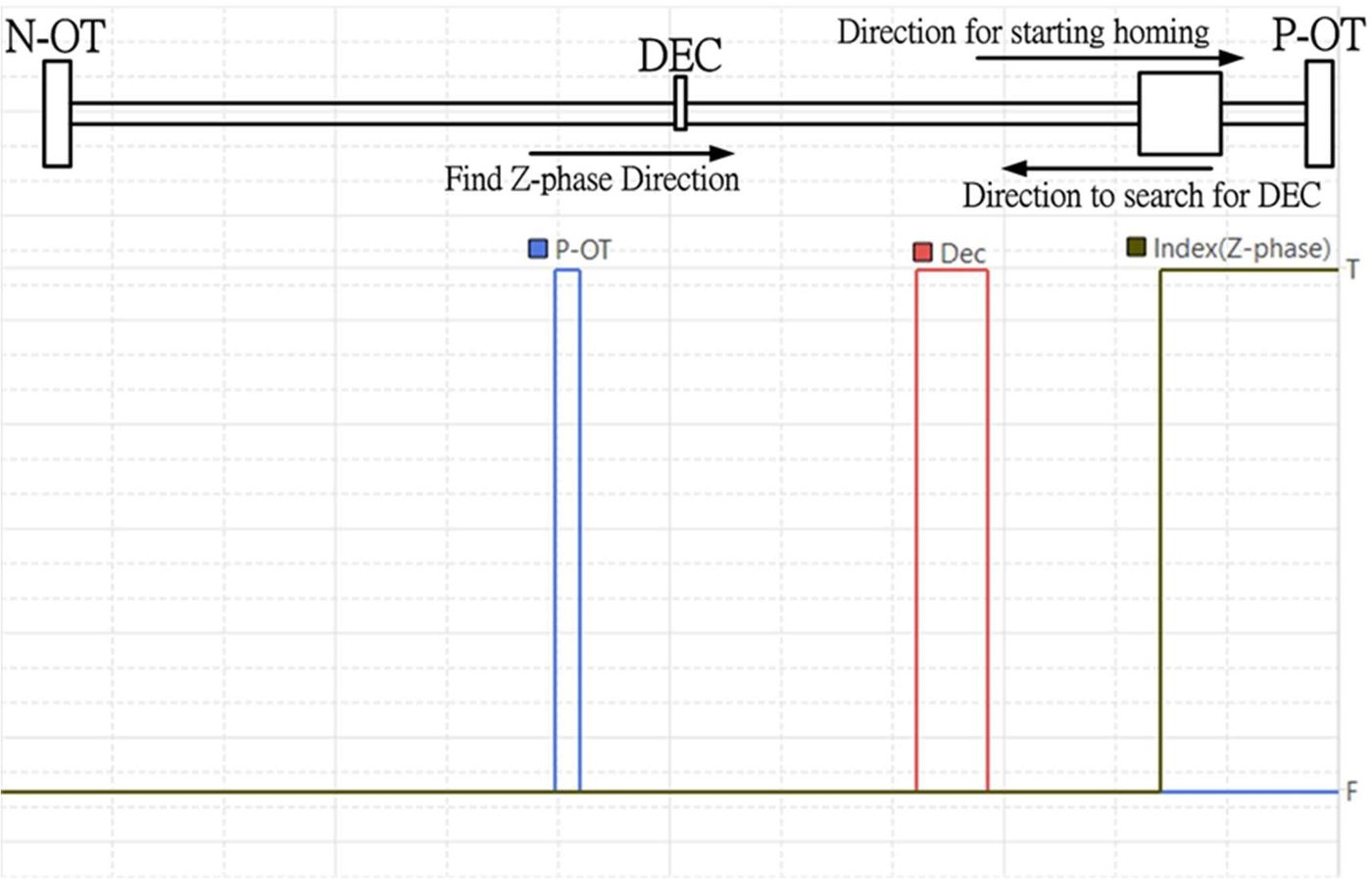
Homing Mode Description
1. Upon receiving the homing return start signal, the servo moves toward the positive limit (P-OT) at the designated homing return speed (parameter Pn634) to locate the homing deceleration sensor (DEC).
2. If the positive limit (P-OT) is reached during movement, the servo reverses direction and moves toward the negative limit (N-OT), continuing to search for the homing deceleration sensor (DEC).
3. When the servo detects the falling edge signal of the homing deceleration sensor (DEC), it decelerates to the speed specified for detecting the Z-phase (Index) signal (parameter Pn635).
4. The servo continues moving toward the positive limit (P-OT) at the Z-phase detection speed (Pn635) until the rising edge of the encoder’s Z-phase (Index) signal is detected, thereby completing the homing return process.
11. Homing with home switch and index pulse(DS402 Home method 11)
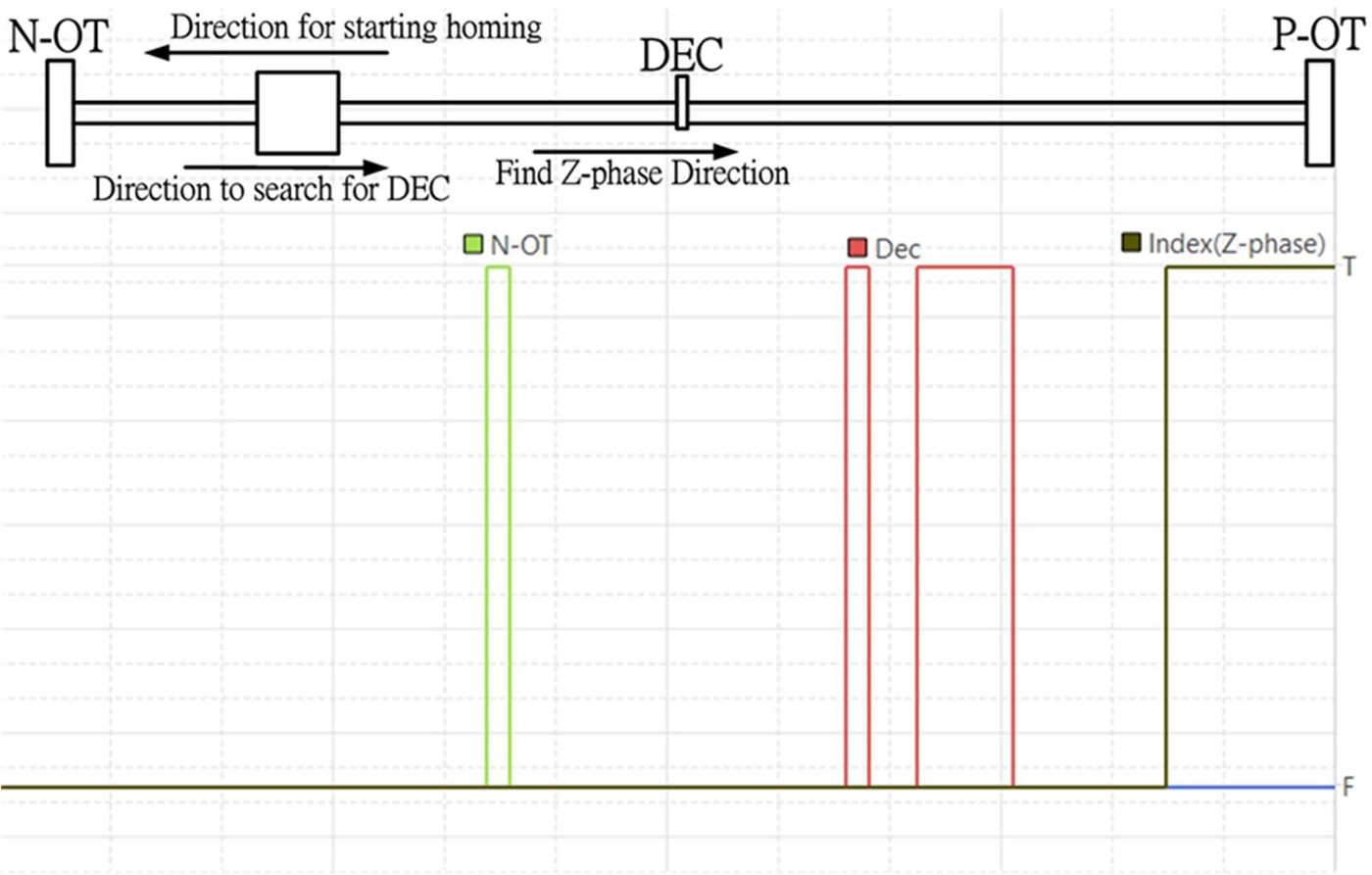
Homing Mode Description
1. Upon receiving the homing return start signal, the servo moves toward the negative limit (N-OT) at the designated homing return speed (parameter Pn634) to locate the homing deceleration sensor (DEC).
2. If the negative limit (N-OT) is reached during movement, the servo reverses direction and moves toward the positive limit (P-OT), continuing to search for the homing deceleration sensor (DEC).
3. When the servo detects the rising edge signal of the homing deceleration sensor (DEC), it decelerates to the speed specified for detecting the Z-phase (Index) signal (parameter Pn635).
4. The servo continues moving toward the positive limit (P-OT) at the Z-phase detection speed (Pn635) until the rising edge of the encoder’s Z-phase (Index) signal is detected, thereby completing the homing return process.
12. Homing with home switch and index pulse(DS402 Home method 12)
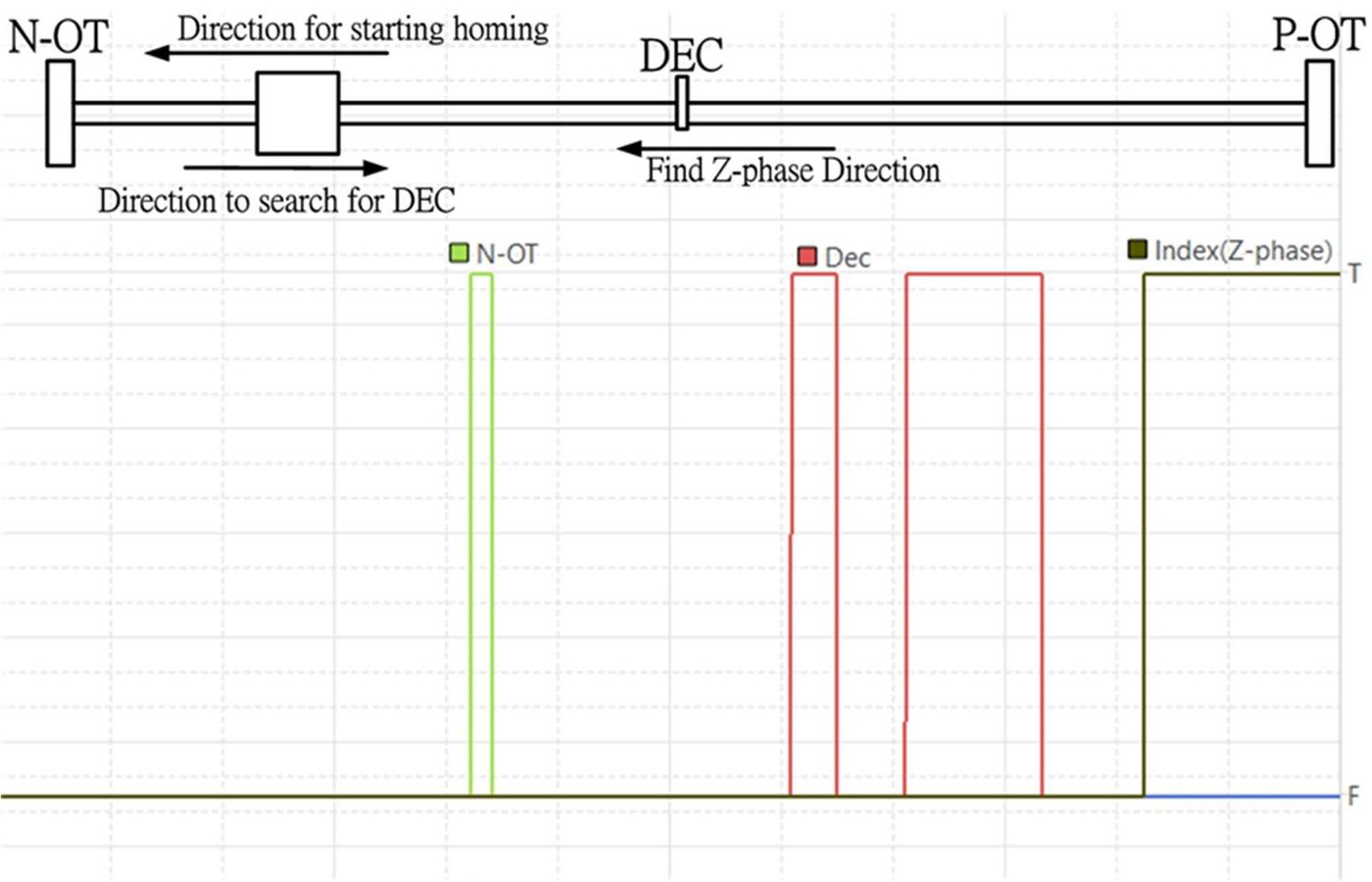
Homing Mode Description
1. Upon receiving the homing return start signal, the servo moves toward the negative limit (N-OT) at the designated homing return speed (parameter Pn634) to locate the homing deceleration sensor (DEC).
2. If the negative limit (N-OT) is reached during movement, the servo reverses direction and moves toward the positive limit (P-OT), continuing to search for the homing deceleration sensor (DEC).
3. When the servo detects the rising edge signal of the homing deceleration sensor (DEC), it decelerates to the speed specified for detecting the Z-phase (Index) signal (parameter Pn635).
4. The servo continues moving toward the negative limit (N-OT) at the Z-phase detection speed (Pn635) until the rising edge of the encoder’s Z-phase (Index) signal is detected, thereby completing the homing return process.
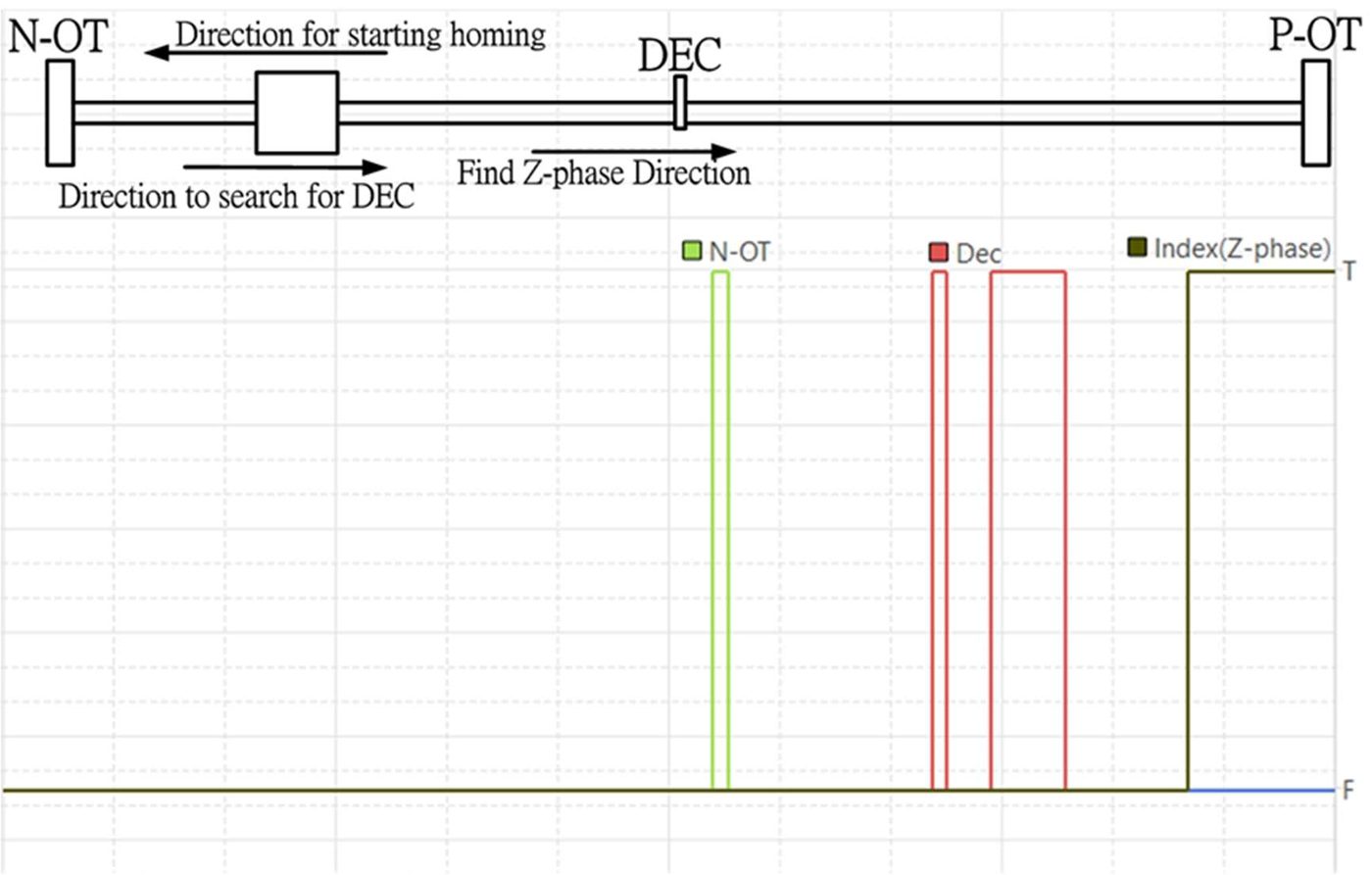
13. Homing with home switch and index pulse(DS402 Home method 13)
Homing Mode Description
1. Upon receiving the homing return start signal, the servo moves toward the negative limit (N-OT) at the designated homing return speed (parameter Pn634) to locate the homing deceleration sensor (DEC).
2. If the negative limit (N-OT) is reached during movement, the servo reverses direction and moves toward the positive limit (P-OT), continuing to search for the homing deceleration sensor (DEC).
3. When the servo detects the falling edge signal of the homing deceleration sensor (DEC), it decelerates to the speed specified for detecting the Z-phase (Index) signal (parameter Pn635).
4. The servo continues moving toward the positive limit (P-OT) at the Z-phase detection speed (Pn635) until the rising edge of the encoder’s Z-phase (Index) signal is detected, thereby completing the homing return process.
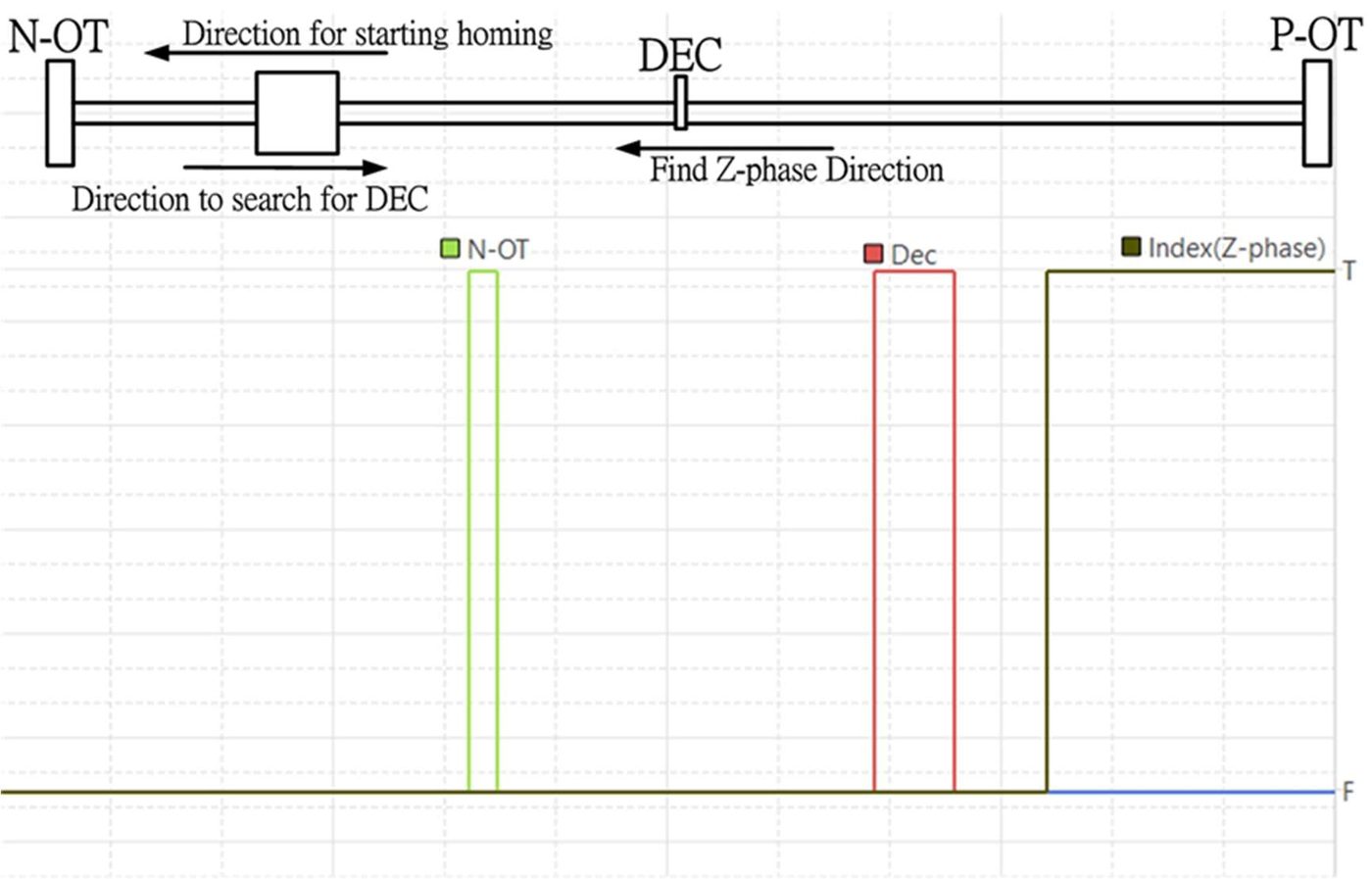
14. Homing with home switch and index pulse(DS402 Home method 14)
Homing Mode Description
1. Upon receiving the homing return start signal, the servo moves toward the negative limit (N-OT) at the designated homing return speed (parameter Pn634) to locate the homing deceleration sensor (DEC).
2. If the negative limit (N-OT) is reached during movement, the servo reverses direction and moves toward the positive limit (P-OT), continuing to search for the homing deceleration sensor (DEC).
3. When the servo detects the falling edge signal of the homing deceleration sensor (DEC), it decelerates to the speed specified for detecting the Z-phase (Index) signal (parameter Pn635).
4. The servo continues moving toward the negative limit (N-OT) at the Z-phase detection speed (Pn635) until the rising edge of the encoder’s Z-phase (Index) signal is detected, thereby completing the homing return process.
Tip: press ← → to switch chapters, Ctrl+K to search